Get Involved
Your knowledge, experience and expertise can help students thrive. From supporting them as they decide to come to SCSU to mentoring them as they navigate their next career step.
When you pull down the drive of Silent Run Adventures and are greeted by the sounds of 35 Siberian huskies howling to announce your arrival, you quickly realize the sled dog farm is silent in name only.
St. Cloud State University alumnus Jack Christopher wouldn’t have it any other way.
“No one’s breaking in here,” he said.
Christopher earned his bachelor’s in marketing and business from SCSU in 1988. He spent the next 15 years working in the electronics industry, selling and servicing small-footprint devices such as pin pads or check readers. He eventually was a part-owner in the company he worked for before the ownership group sold the business. In the meantime, he had already started Silent Run Adventures and decided it was time to focus on it full time.
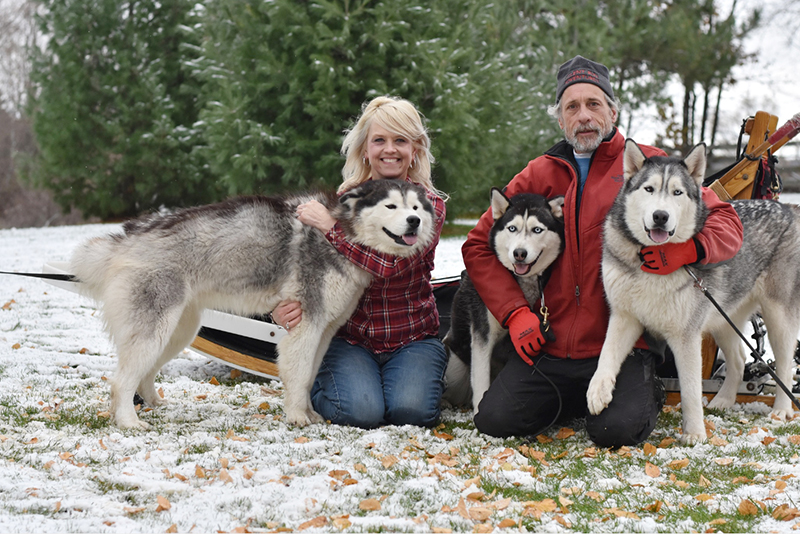 Silent Run Adventures is about 17 years old now. Christopher and his wife, Kris, travel with the dogs and bring them to events all over the state and region. However, the majority of their business is bringing visitors to their farm in Monticello, Minnesota. Guests can go on dogsled rides, learn about the huskies and check out the barn — where the Christophers have Scottish sheep and a miniature horse as well as various types of goats, turkeys and chickens. Of course, each visitor gets an up-close experience with the purebred Siberian huskies.
“They look like Blizzard,” Christopher said.
The connection to his alma mater is continued with almost all of his gear and branding — from his utility trailer and sleds to the Silent Run Adventures logo — all in red and black. His first intro to “husky type” dogs occurred at St. Cloud State, when took he in a Samoyed as a student.
“Samoyeds are husky type dogs — great big white dogs, long hair. I call him my intro husky,” he said. “If I wouldn't have been able to handle a Samoyed, I never would have been able to move up to Siberians, because Siberians are their own challenge.”
While Samoyeds are protective and extremely loyal, Christopher said they’re much easier to handle than Siberian huskies.
“Siberians are extremely independent. They need you for what they need you for. They still love you, they still want to be around you, but for the most part, ‘Feed me, pet me a little bit, and other than that, I'm good.’ And they're runners. There’s evidence the breed’s been around for close to 5,000 years, so they've been around pulling something for a long time,” he said. “Sometimes I compare it to a pointing dog. You don't have to teach a pointer to point. They just do it instinctively. You don't need to teach a Siberian to pull. It's in their DNA. Sometimes there's no making them go. Sometimes it's a big challenge to get them to stop. That's our biggest challenge, is just keeping control of the dogs because a loose dog is often a lost dog.”
Christopher first started learning sled dog training after graduating from SCSU, when he moved out to Colorado with his Samoyed and met some sled dog owners while out skiing. He started applying the training techniques to his dog, and by the time he moved back to Minnesota they had the left and right commands down. A year later, Christopher got his first Siberian husky, and added a second one the year after that. He credits his Samoyed with helping to teach his first two huskies. Once he moved out to Monticello, Christopher built a kennel that has since expanded dozens of times over.
“Seems like once you do that, then the phone starts ringing,” he said. “I'd get messages pinned to my door, ‘I’ve got this husky, he's eating up my house, will you take him?’ And I took in about a dozen rescues or rehomes at that time and bought a used sled and started driving.”
Christopher was largely self-taught, until he met musher Kelly Murphy of Ely, Minnesota, during a trip up to the Boundary Waters. Murphy gave Christopher a number of tips for everything from movements to equipment, and built a freight sled for Christopher. By the late ’90s Christopher was mushing two teams of dogs.
“I pretty much figured things out on my own with a lot of Kelly's help after I got going, and realized that when the time came, I could probably make a business out of this,” Christopher said.
He credits brutal winter runs in the Boundary Waters with helping him and the dogs hone their craft. Most mushers seen in races are running mixed-breed dogs they call Alaskan huskies, according to Christopher. Raising Siberian huskies and teaching them to pull sleds instead of race is entirely different. Christopher would train with 300 pounds of steel in the sled to get himself as well as the dogs used to pulling the weight. The work has paid off.
“We've developed a pretty good business. We've got a strong reputation,” Christopher said. “We're ranked really high as far as dogsled ride providers.”
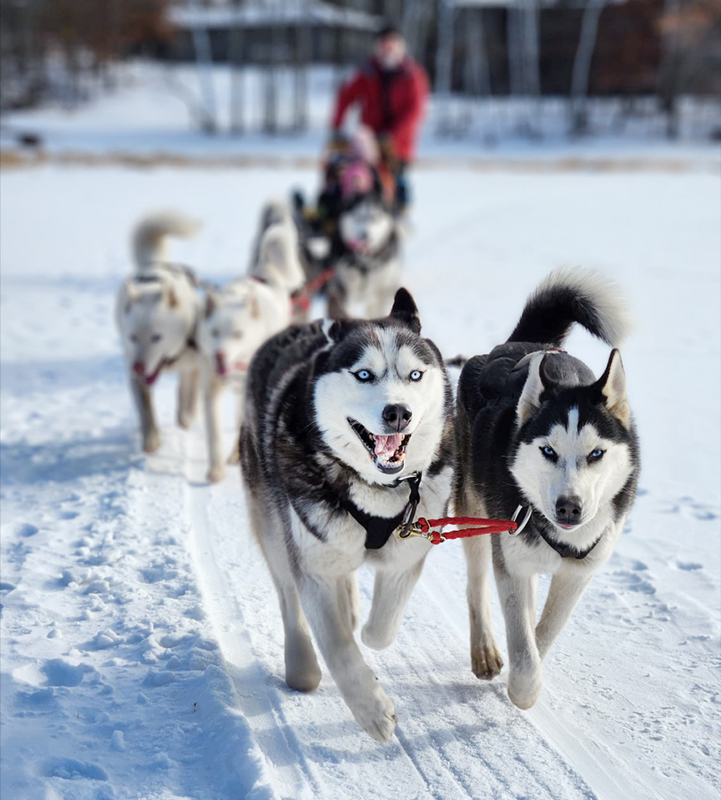 He’s now owned Siberian huskies for over 30 years, and estimates he’s had at least 150 dogs altogether.
“I've learned a lot. My first couple dogs taught me a lot, so I don't make too many mistakes these days, but every now and then something happens. I really got hooked on the breed. Those dogs need something to do. When they don't have anything to do, that's when problems are happening,” Christopher said. “An idle Siberian is up to mischief. In fact, I have a dog named Mischief. He’s got a sister named Mayhem. I have a Chaos and a Havoc, and they're suitable for what huskies are. If it's too quiet outside in the kennel, I have to go see what's up. If it's too loud out in the kennel, I have to go see what's up. Either they're digging or they're chewing or they're doing something they maybe shouldn't be doing.”
The Christophers make sure to try and educate visitors to the farm about Siberian huskies, and how they’re not meant to be house pets.
“Come see us, go home and still have furniture and carpets and drapes and a yard. My usual quip is, if your house is wrapped in steel — like the backside of mine that butts up to the house kennel is steel and aluminum — and your yard looks like a moonscape, you might have a Siberian husky,” Christopher said. “People like their yards, and huskies and grass don't mix. I build a new kennel, and the grass is gone in a week.”
The dogs need to be kept cool in the Minnesota summers. The Christophers have 25- to 45-gallon water tanks throughout their kennels for dogs to cool off in, as well as shade and air-conditioned dog houses. They don’t start training for the next season until around November, or whenever it gets down to 30 degrees at most.
In summer 2025, Christopher had a few dogs staying in the house rehabbing from ACL tears or surgical repairs, as well as others who have aged out of mushing. The Christophers have taken in rescues or rehomes from time to time, and previously bred two of their own huskies to add numbers to their teams of sled dogs. Training in young dogs is a process that spans years, and even more so if they’re overcoming poor or lacking training with an adopted dog. The key with young dogs is building up their strength, but the most important part is making sure the huskies are having fun and aren’t overworking themselves.
Happy dogs make for a happy musher.
“Every now and then I get clients who ask, ‘How can you make your dogs do that?’ There's no making them do it. You're just trying to control the chaos,” Christopher said. “They do it very instinctively. I've got pictures in my barn of dogs pulling a sled and they have the biggest grins on their face you can hardly believe. They're in their element. They love what they're doing; that's all they want to do. When we're hooking up a team, it's like we compare it to picking teams in gym class. ‘Pick me, pick me, pick me.’ They're all howling and barking. And some of them know who they run next to. So if you grab one dog, they know they're next. They don't come with a manual. Someday when I retire, maybe I'll write a manual.
“I'm sure Blizzard's much easier to control than our huskies.”
Your knowledge, experience and expertise can help students thrive. From supporting them as they decide to come to SCSU to mentoring them as they navigate their next career step.
Keep up-to-date with the latest news and research from the University, connect with local alumni and attend events, workshops and seminars.
Whether you are making a difference in your community, bringing about change to your industry or shaping the lives of those around you. We want to hear from you.