Get Involved
Your knowledge, experience and expertise can help students thrive. From supporting them as they decide to come to SCSU to mentoring them as they navigate their next career step.
Storytelling has helped St. Cloud State University alumnus Nick Hanson process some of the more difficult chapters of his life, including his struggles with addiction and his sobriety journey. It has also made it possible for him to share those experiences in an effort to help others.
Hanson earned his degree in mass communications from SCSU in 2005. While on campus he enjoyed participating in a number of intramural sports and working for the University Chronicle. His time at the Chronicle led Hanson to an internship with an outdoors magazine as well as writing for the St. Cloud Times newspaper when he was still a student.
 “When I left school, I don't even think I put my GPA on my resume because I had so much great experience from the Chronicle, in my writing internships and the St. Cloud Times. It was super applicable to the real world; I had the experience,” he said. “It wasn't like I would go into a job interview and need to say, ‘Well, I got an A in this class where I wrote a really nice paper.’ I had all this great stuff to show everybody right away. The education, especially mass communications and the journalism program, really prepared me for graduation.”
Hanson landed a job with the Mankato Free Press straight out of SCSU, where he would work for a couple years before moving into the media relations and communications fields for a number of places, including Mayo Clinic. He is now a communications manager with Gillette Children's Specialty Healthcare, a statewide nonprofit network of pediatric hospitals in Minnesota.
“It’s pretty fulfilling,” he said. “I’m communicating things and sharing messages of hope and inspiration and healing and new therapies and treatments that are really going to help people.”
While Hanson has succeeded professionally throughout his adult life, for much of it he was dealing with challenges that he did his best to hide from others.
“My journey with alcoholism and substance abuse, it stretches a long time. It started before my time at St. Cloud State, and I had just turned 40 when I finally got sober and decided to seek help,” he said. “For me, it wasn't something that happened over a month or a day or even a year or five years — it was a slow kind of progression with highs and lows and everything. But there were breadcrumbs and clues and hints along the way.”
The drinking and partying with friends in his younger years transformed into happy hours with colleagues or networking at professional events as Hanson navigated his twenties and early thirties. As he met the woman who would eventually be his wife — who didn’t drink much at all — and the couple got more serious, Hanson slowly started to “test the waters a little bit” when it came to his drinking.
“I had a few events happen with family and friends where I kind of questioned my relationship with alcohol — I did things I wasn't proud of or I was just acting in a way that wasn't great,” he said. “I would try to moderate my drinking a little bit.”
Hanson decided to try giving up alcohol completely for Lent one year, thinking that if he made it the full 40 days without issue, then he didn’t have a drinking problem.
“It was the hardest thing I'd ever done in my life,” he said.
While he made it to Easter without drinking, Hanson said it took all of a week before he was back to his previous levels of alcohol consumption. It got to the point where he was drinking every day and drinking to excess multiple times a week.
“It started to get problematic, and I had a few more times where I kind of tried to moderate and it didn't work that well. It started to impact my relationship with my wife and we had our first daughter. As you get older and you're drinking more, it starts to bleed into your duties and everything,” Hanson said. “But I'd never really wanted to quit, and I didn't want to admit that I had a problem.”
Then in his mid- to late-thirties, Hanson went online and read about a moderated approach to drinking, where the service claimed it would help participants track their drinking habits to — not quit — but curtail drinking.
“I went and saw them and they even advised me when I first went there. I told them about my drinking patterns and history and all that stuff. And they were like, ‘You've been at it for a while and the chances are you probably just need to quit,’” Hanson said. “Even though their whole approach was, ‘We'll meet you where you’re at and moderation is key’ — ‘you should probably quit.’ But people need to fail on their own sometimes to realize they have a problem. And of course, I didn't hear anything.”
Hanson installed the company’s app — which considered 14 drinks in a week as the threshold for heavy drinking — on his phone and started to track his habits.
“I realized 14 drinks a week for somebody with an alcohol abuse problem or for an alcoholic is not enough. I started having extra drinks and beers and stuff that I wasn't being honest about,” he said. “I was lying about my drinking and having more than I should. I started to secretively drink extra drinks here and there, and even hiding bottles and beers and alcohol around my house and in different places like that.
“I wasn't drinking for fun anymore. It was more like simple maintenance. It was just something that I had to do; I just had to have it in my life,” Hanson said. “I started to see some of the negative health consequences. I was perpetually tired and hungover and having to deal with feeling 50% all the time, and still having to get up and go to work and take care of my kids.”
In 2020 the COVID-19 pandemic shook the world, and Hanson was not immune.
“I definitely had problems before COVID and I had lots of warning signs and things. I tried to cut back, but I think I would have eventually ended up where I was anyways,” he said. “COVID was a catalyst for me that went from me having an alcohol abuse problem to being a straight up alcoholic. It was bad.”
 An extrovert, Hanson said the isolation of the pandemic was extremely difficult for him. He was starting to see the negative effects on his health from drinking, such as gaining weight and a worsening complexion. While he said he struggled with his mental health previously, those issues were returning and getting worse amid the pandemic.
“Alcohol is a great panacea. Alcohol really helps with anxiety while you're drinking, but then when you're not drinking, it exacerbates the problem and makes it worse,” he said. “So that was a real issue for me.”
A ways into the pandemic, Hanson said he was almost exclusively secretly drinking off of hidden bottles of alcohol. He eventually was pulled over for a DUI in the middle of the day while he had his children in the car.
“I had to look in the mirror and think, ‘What am I doing? This is not sustainable.’ I got my DWI and dealt with the immediate fallout and consequences,” he said. “I took care of my responsibilities and I'm like, ‘Okay, I'm going to quit drinking, get my license back, deal with my legal stuff, be a good husband, be a good father, work and all that stuff,’ — and I still went back out another time.”
Hanson stayed sober for three months following his DUI. When he eventually had to go out of town for a work conference, he felt it would be awkward if he wasn’t drinking with others while at the evening networking events. Hanson had a few beers at the conference, and said within a week he was back to where he was before the DUI.
“It went on for another nine months and that was the worst. It was hard to be alive. My existence was pain. It was the most difficult time of my life. Near the end of that, I was really starting to get sick and tired of being sick and tired. I knew I needed to make a change, and I was almost ready to look in the mirror. It was my oldest daughter's seventh birthday. I was just maintenance drinking through the day, and it was time to have cake with her after dinner. I was passed out drunk and I couldn't celebrate with her. I woke up the next day and decided to go to treatment,” he said. “I went to inpatient treatment, and it was the best thing that I ever did. I had had enough warning signs. I tried and failed enough and I wanted to get healthy. I had to give up and say, ‘I have a problem, I need help, and I need to go away so I can get the education I need and learn about my addiction and my mental health, and get the tools I need so I can thrive and survive in this world.’”
Hanson went to treatment in Owatonna, Minnesota, and learned a lot about the importance of finding support through community.
“You need to take care of your mental health and your well-being, and you have to have a community of people to support you. That's not going to be your spouse, it's not going to be your parents, it's not going to be your best friends. It's going to have to be other alcoholics and addicts who support you and can get you through recovery and treatment,” he said. “When I got out of treatment, it was refreshing. I learned a lot and I started getting my health back and got off alcohol and everything. I just dove headfirst into sobriety and I found my community of fellow alcoholics and dove into my recovery. It's been one of the best things that I've done in my life.
“Life is not perfect when you get sober; life is still difficult. But the difference when you're sober is you can deal with the problems life throws at you. And I'm able to do that now every day.”
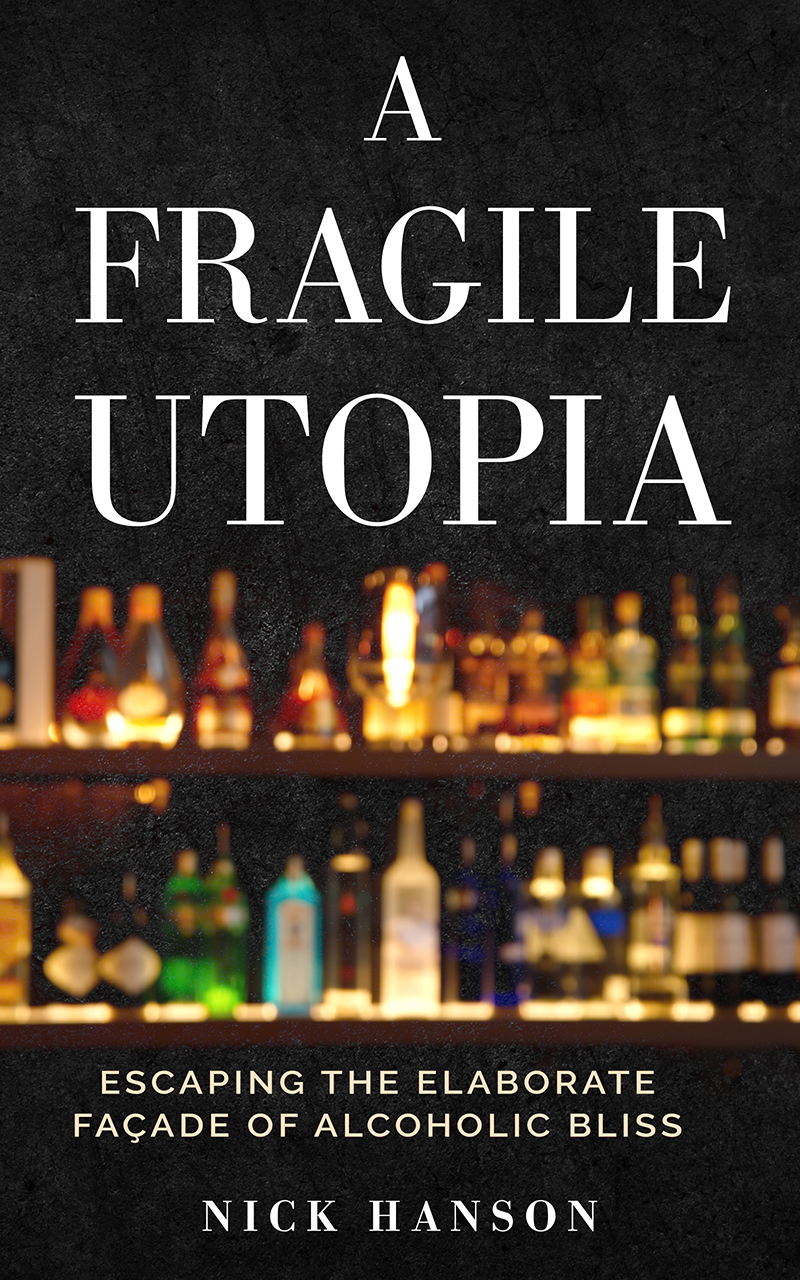
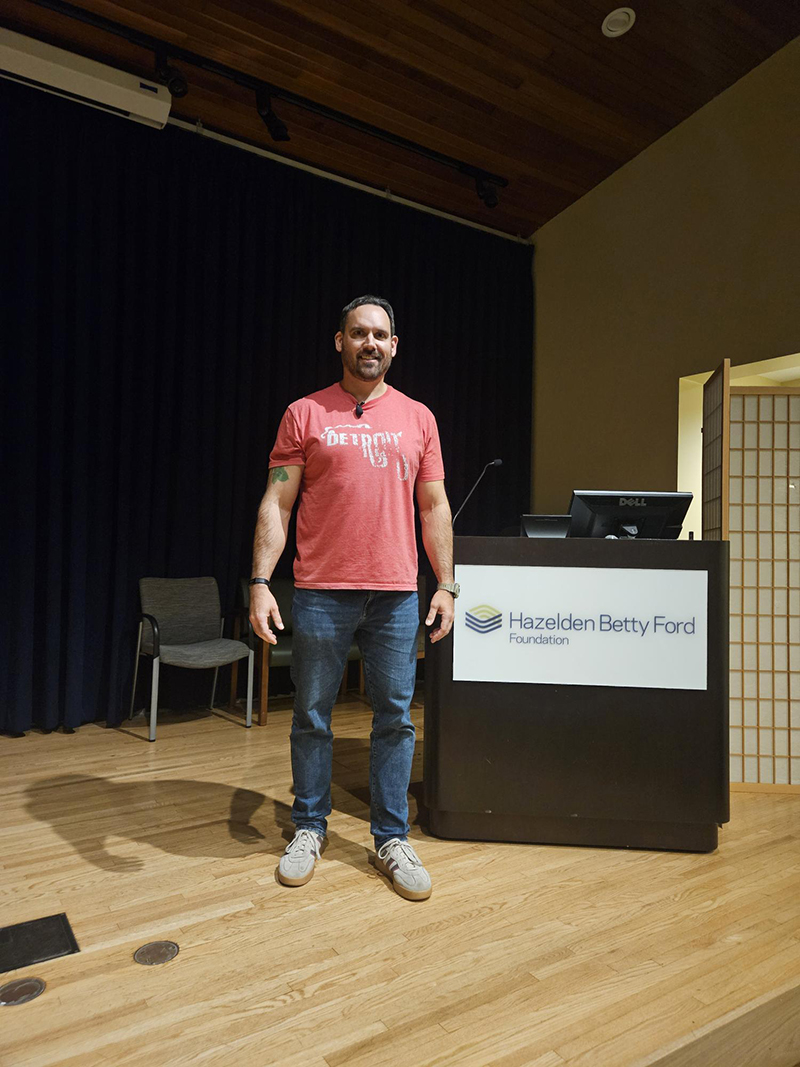
As Hanson worked through the steps of his sobriety and started making amends, it was time to start giving back. He started talking with others and sharing his sobriety and recovery story. It evolved into speaking engagements, including at the treatment center Hanson attended for his own recovery. The more he talked with others, the more Hanson started writing down and chronicling his own story. In December 2025 he published his memoir, “A Fragile Utopia: Escaping the Elaborate Façade of Alcoholic Bliss.”
“I want to share the message of hope and healing and recovery with other people, so I've been continuing to do that,” Hanson said. “I'm speaking, I have my book, I'm doing other things in recovery — but I've turned my biggest weakness into my superpower.”
Out of everything he’s been through, Hanson said the best part of the journey has been the impact he can have on others.
“What feels the best for me is when I hear from other people who are struggling who take some wisdom from something I've shared. Or somebody comes up to me after they hear me speaking or read something that I wrote, and they say, ‘That's exactly how it is. That's how I feel. I'm trapped. I don't know what to do.’ And then I can talk to them and offer some more insight. That's what really is exciting for me. I love talking to people in recovery and addiction, and I want to continue,” he said. “I've tweaked my message a little bit, too, and I've started to share it not just in recovery communities. It's a broader message of some of the themes in recovery, like you have to let the small stuff go. You can't let your past define you. You have to learn from it but move on.
“I talk a lot about giving yourself grace and I talk a lot about having empathy for other people. That message has really resonated with everybody, not just people who are in recovery or who are struggling with addiction. I've really enjoyed sharing that message and talking about my journey and how much better — not just better, but exponentially better — my life is living that way.”
Your knowledge, experience and expertise can help students thrive. From supporting them as they decide to come to SCSU to mentoring them as they navigate their next career step.
Keep up-to-date with the latest news and research from the University, connect with local alumni and attend events, workshops and seminars.
Whether you are making a difference in your community, bringing about change to your industry or shaping the lives of those around you. We want to hear from you.